Thinking about leaving Fargo but not ready to give up easy access to it? That is exactly why Casselton catches so much attention from relocation buyers. If you want to understand how daily life, housing, and convenience compare between these two places, this guide will help you sort out the tradeoffs and decide what fits you best. Let’s dive in.
Casselton vs. Fargo at a glance
Casselton and Fargo offer very different living experiences, mostly because of scale. According to the U.S. Census Bureau, Casselton has a population of 2,479 and about 2.0 square miles of land area, while Fargo has 125,990 people and 49.8 square miles.
That size difference shapes almost everything you will notice as a buyer. In Casselton, daily life happens in a much smaller footprint, while Fargo offers a much broader range of services, destinations, and housing options within the city itself.
Casselton is also close enough to keep Fargo in your routine. The city says it is 18 miles from Fargo and about 15 minutes west on I-94, which makes it a practical option if you want a smaller community without feeling cut off from the metro.
Commute and access in Casselton
For many buyers, the biggest question is simple: can you still get to Fargo easily? Based on Casselton’s location along I-94, the answer is yes for many day-to-day needs, especially if your work, shopping, or appointments regularly take you east.
The commute story here is fairly straightforward. Casselton’s city information highlights quick interstate access, and Fargo’s mean travel time to work is 15.5 minutes, according to Census data. While those are different measurements, they suggest Casselton can still fall within a familiar commuting rhythm for many people who are used to metro travel times.
This matters if you want flexibility. You can handle a lot locally in Casselton, then head into Fargo when you want a wider range of retail, services, or entertainment.
Casselton is also planning for future movement and growth. The city notes a new shared-use path along Highway 18 from the Interstate to Cottonwood Drive, and its 2045 comprehensive plan includes transportation and future land use planning.
What daily life looks like in Casselton
Casselton covers more of the basics than some buyers expect from a smaller community. The city’s food and drink information lists a full-service grocer, a butcher shop, convenience and food-plaza options, coffee, and several casual dining spots.
That local coverage can make daily routines feel simpler. Instead of planning every errand around a larger city, you may be able to take care of groceries, a quick meal, or other basics closer to home.
Municipal services also play a big role in the day-to-day experience. Casselton provides garbage totes, curbside recycling, water and sewer service, and landfill access, which gives residents a clear local service structure.
The city’s events calendar adds another layer to daily living. Recurring civic and community gatherings include city council meetings, business association meetings, library story time, and club meetings, which reflects a very local, hands-on community rhythm.
How Fargo differs in everyday convenience
Fargo offers convenience through volume and variety. If you want more parks, more schools, more retail activity, and more specialized services without leaving the city, Fargo has a much deeper bench.
Fargo Parks says the district has more than 150 parks and facilities, over 105 miles of trails, and more than 2,800 acres. Fargo Public Schools says the district has 26 schools and more than 11,200 students.
The city’s commercial scale is also much larger. Census QuickFacts for Fargo show 2022 retail sales of $4.42 billion and health care and social assistance receipts of $4.03 billion, which helps illustrate the size of the local economy and service base.
If you prefer having the broadest possible menu of choices close by, Fargo will likely feel more convenient. If you are comfortable making occasional metro trips while keeping home life in a smaller setting, Casselton may feel like a strong fit.
Housing in Casselton vs. Fargo
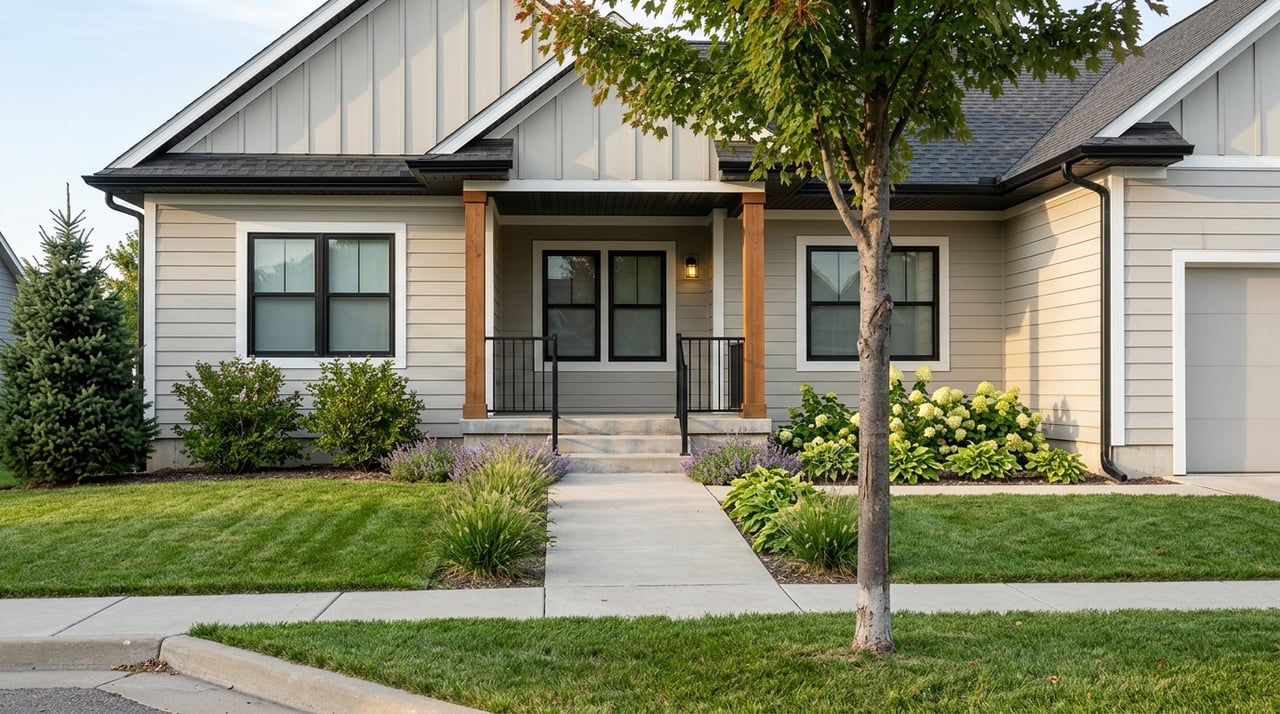
Housing is another major point of comparison. Casselton’s land-use ordinance shows a pattern centered mainly on detached homes and other low- to mid-density housing forms.
Permitted residential uses include single-family residences, twin homes, two-unit townhouses, modular homes, and some home occupations and daycare uses. Other housing types, such as two- or three-family residences and condominiums, may be allowed as conditional uses in selected districts.
The lot standards also tell you something important about the feel of the housing stock. Minimum single-family lot sizes range from 5,400 square feet in Small Lot Residential to 7,800 square feet in Medium Density Residential and 9,750 square feet in another residential district, with minimum lot widths from 45 to 75 feet.
In practical terms, that points to a more conventional suburban development pattern rather than dense urban blocks. It also suggests Casselton is built for buyers who want more traditional neighborhood layouts and a housing mix that leans heavily residential.
New construction and rentals in Casselton
Casselton is not just a resale market. The city’s housing pages list homes and lots for sale in developments such as West Creek Cottages, Casselton Farms Development, Prairie Skies Development, and East View 3rd Addition.
That matters if you are relocating and want choices beyond older housing stock. It suggests there are opportunities to explore new construction or lot-based options, even though the market is much smaller than Fargo’s.
Casselton’s rental page also lists apartments, multi-unit buildings, and houses for rent. So if you are moving on a shorter timeline, want to test the area first, or are not ready to buy right away, there may be local rental options worth considering.
Community feel and pace of life
One of the clearest differences between Casselton and Fargo is how life feels on the ground. Casselton consistently presents itself as a walkable, connected, small-town community with hometown conveniences and a historic downtown business area.
The city says you can walk the whole town end to end in about 45 minutes. That is a small detail, but it says a lot about pace, scale, and how visible community life can feel from one day to the next.
Casselton also highlights events such as Summerfest and Jingle & Mingle, along with regular civic and club meetings. The Casselton Heritage Center adds more local programming and a connection to community history.
For some buyers, that kind of setting is the draw. You may appreciate a place where routines feel more familiar, local services are easier to recognize, and the community structure feels easier to navigate.
Schools, recreation, and local resources
If you are comparing everyday support systems, Casselton has several important local resources. The city’s education page says Central Cass serves PreK-12 with about 1,100 students, average class sizes of 20, a 96% graduation rate, and more than 35 athletics and activities.
The same city information also lists licensed child care providers. For relocation buyers, that can be useful when you are trying to build a workable daily routine after a move.
On the recreation side, Casselton’s parks page points residents to city parks, a swimming pool, and golfing. While that is a smaller system than Fargo’s, it still gives you local options for outdoor time and recreation close to home.
Who Casselton fits best
Casselton and Fargo are not better or worse than each other. They solve different problems, and that is what matters most when you are choosing where to live.
Casselton may be a better fit if you want:
- A smaller community about 15 minutes west of Fargo on I-94
- Local basics covered in town
- A more compact, connected daily rhythm
- A housing mix focused on detached homes and lower-density neighborhoods
- Access to Fargo when needed without living in the middle of the metro
Fargo may be a better fit if you want:
- A much larger selection of parks, trails, schools, retail, and services
- More in-city variety for errands and activities
- A larger-scale job, shopping, and health care environment
- The convenience of staying within one city for most needs
How to make the right move
If you are relocating to the area, the smartest choice usually comes down to your routine. Think about where you work, how often you want to drive into Fargo, what kind of housing style you prefer, and whether you want a smaller local setting or a bigger city environment around you every day.
It also helps to think beyond square footage and price. A move works best when your home, commute, and lifestyle line up in a way that feels manageable long after closing day.
If you want help comparing Casselton with Fargo, West Fargo, Horace, Moorhead, or other nearby communities, Arlin Fisher can help you look at the options clearly and move forward with confidence.
FAQs
How far is Casselton from Fargo for a daily commute?
- Casselton says it is about 18 miles from Fargo and roughly 15 minutes west on I-94, which makes it a practical commute option for many buyers.
What kinds of homes are common in Casselton?
- Casselton’s land-use rules show a housing mix centered on single-family homes, twin homes, two-unit townhouses, modular homes, and some additional residential forms in selected districts.
Does Casselton have local amenities for everyday needs?
- Yes. City information lists a full-service grocer, butcher shop, convenience and food-plaza options, coffee, casual dining, local parks, a swimming pool, and golf.
How does Fargo compare to Casselton for amenities?
- Fargo offers a much larger amenity base, including more than 150 parks and facilities, over 105 miles of trails, 26 schools, and a far larger retail and service environment.
Is Casselton a good option for relocation buyers?
- Casselton can be a strong option if you want a smaller community, easy interstate access to Fargo, local day-to-day services, and housing options that include both resale and some new-construction opportunities.